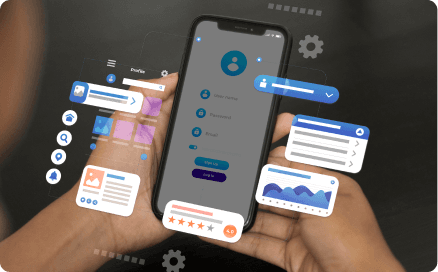
Design for Decisions, Not Just Aesthetics
A website that converts is built around how users make decisions, not just how it looks. Visitors need three things to take action: clarity about what you offer, trust that you can deliver it, and a low-friction path to say yes. If any of those elements are weak, you can drive all the traffic in the world and still see no business growth. Beautiful design without conversion intent is just an expensive brochure.
One Goal Per Page
Every page should have one primary goal. Too many competing calls to action confuse visitors and reduce the likelihood of any action being taken. Place your main CTA where attention is strongest: above the fold, after key benefit sections, and at the end of the page. Keep button labels specific and outcome-focused — "Get a Free Proposal," "Book a Discovery Call," or "Start Your Project" outperform generic "Contact Us" labels every time.
Trust Signals Close the Gap
Most visitors arrive with scepticism. Trust signals bridge the gap between interest and action. Include client testimonials, recognisable logos, certifications, before-and-after results, and concise case studies. Place these strategically near forms and pricing sections — exactly where decision anxiety is highest. Social proof at the right moment can be the difference between a bounce and a conversion.
Speed and Mobile Usability Are Conversion Factors
Page speed and mobile usability are not just technical concerns — they directly affect whether users convert. Optimise images, reduce heavy scripts, and test every form flow on a real mobile device. Most users will not complete a long or unclear form on their phone. Ask only for the fields you genuinely need, and set clear expectations for response time. A fast, frictionless mobile experience is a competitive advantage.
Find Friction With Data
Use analytics tools to identify exactly where users hesitate or leave. Heatmaps show where attention goes, scroll depth reveals how far users read, and session recordings expose usability problems you would never spot otherwise. Combine this with conversion tracking to prioritise the highest-impact improvements. Conversion growth comes from a series of small, systematic wins — better headlines, clearer CTAs, cleaner forms, and faster pages.